
Services · 63 Bits LLC
Services for websites, apps and interfaces
Three service lines, one studio. 63 Bits LLC builds websites, mobile applications and the interface systems that connect them. This page lays out what each engagement includes, what you receive, and how to tell which one your project needs.
Where to start
Pick the line that matches your brief
Most projects land in one of three places: a website that has to explain and convert, a mobile application that has to feel native on both stores, or an interface system that both of those depend on. We scope the work in phases, so something ships early and the rest follows behind it. If you are still deciding, send a short description and we will suggest which service to start with — including when the answer is to begin with interface design before any code.
Website development
Sites that carry the business
Website work covers corporate sites, marketing pages, content platforms and custom web applications. We start with information architecture: the page inventory, what each page is for, and the path a visitor takes toward contacting you or buying. Responsive, mobile-first layouts come after that, because most of your traffic will arrive on a phone.
For content-heavy builds we frequently use WordPress, which gives editors a familiar interface and access to a mature plugin ecosystem. Custom product sites usually run on React with Next.js, with Node.js and Express behind them when the site needs its own API rather than a CMS.
- Corporate and marketing Page inventory, navigation, contact paths, lead capture and analytics-ready structure.
- Content platforms WordPress with custom post types and fields shaped around your editorial process.
- Custom applications React with Next.js, and Node.js with Express where the product needs its own API.

Mobile application development
One codebase, two stores
Mobile engagements produce an app for iOS and Android, usually from a shared codebase. Flutter is our default when visual consistency across devices is the priority, since it renders the same interface on both platforms from one set of components. React Native is the alternative, and it tends to win when your web product is already React and shared logic between web and mobile saves real work.
We also build native Android interfaces with Jetpack Compose, Google's declarative UI toolkit, when a project calls for platform-specific behavior. The choice is a scoping conversation, not a default we apply to everyone.
Flutter
Chosen when one interface should look and behave the same on every device, from a single component set.
React Native
Chosen when your web product is already React and shared logic across web and mobile saves real work.
Jetpack Compose
Chosen when Android needs platform-specific behavior and native interface patterns.
Shared foundations
Authentication, state handling, and API layers structured once and reused across the app surface.
Digital interface design
Flows, prototypes, components
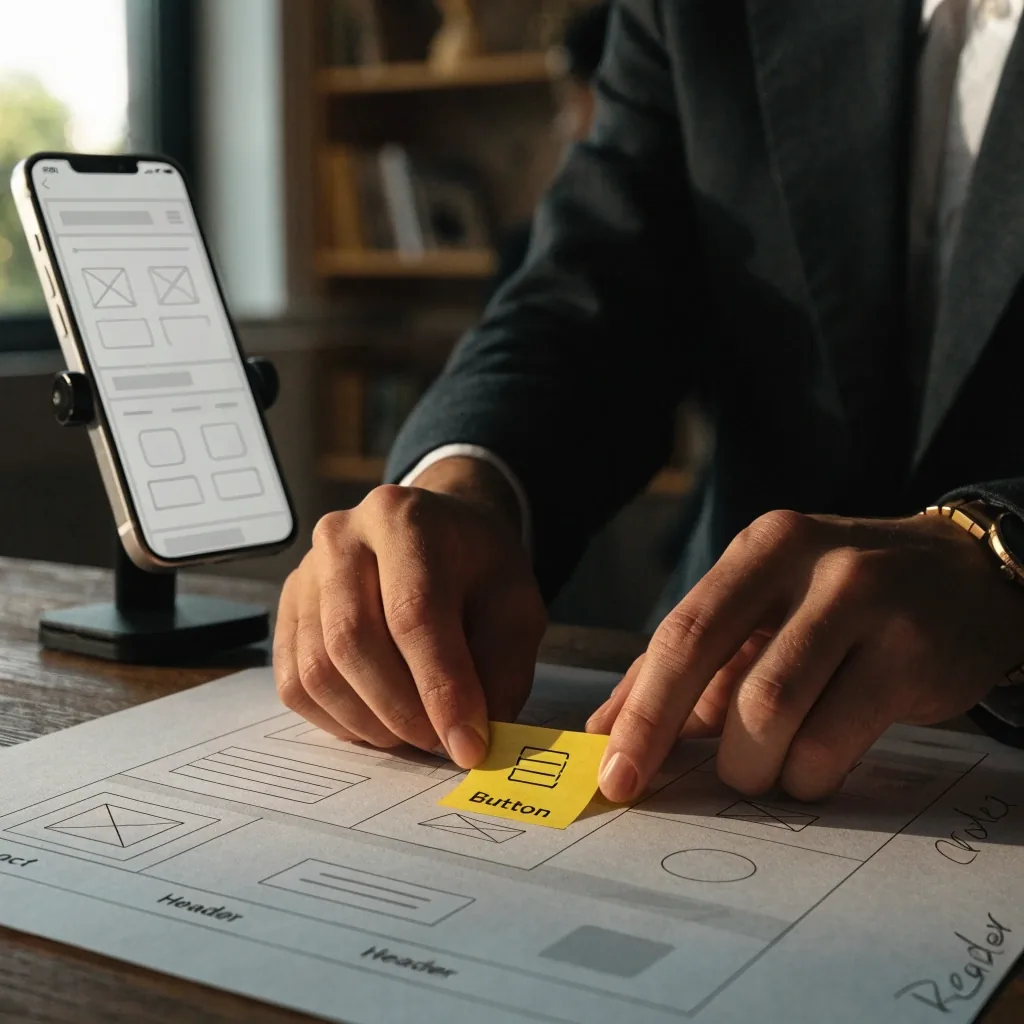
Interface design includes user flows, wireframes, clickable prototypes, visual design and the component library that holds it together. We work in Figma, which keeps design files, comments and developer handoff in one place instead of scattered across exports.
A design system is part of this service, not an add-on. It defines component states, spacing rules, typography scale and responsive behavior. Without it, every new screen becomes a fresh negotiation.
Prototyping and user flow work
Before committing to a build, we prototype the flows that carry the most risk: onboarding, checkout, search, whatever your product depends on. A clickable prototype in Figma is cheap to change and expensive to get wrong in code.
User flow work answers what happens when things go sideways: a failed payment, an empty list, a dropped network. Those states are where most interfaces lose users.
Content management
If someone on your team publishes content, the CMS decision matters as much as the visual design. WordPress remains a practical choice for content-first sites, with custom post types and fields configured to match your editorial process rather than forcing editors into a generic blog structure.
For product sites without a heavy publishing need, content can live in the codebase or a lightweight headless setup. We will recommend the simpler option when it genuinely fits.
Choosing between lines
What each service actually delivers
Website development
Site plus content system
- Information architecture and page inventory
- Responsive, mobile-first layouts
- WordPress or React with Next.js build
- Analytics-ready structure and contact paths
Mobile applications
iOS and Android from one team
- Scoping call on Flutter, React Native or native Android
- Shared codebase across both platforms
- API and authentication layer
- Store submission support and release notes
Interface design
Flows and design system
- User flows and wireframes
- Clickable Figma prototype
- Component library mapped to code
- Developer handoff with documented states
Progressive web apps and cross-platform reach
Sometimes the browser is enough
A progressive web app can cover cases where a full app store release is more overhead than the product needs. It installs from the browser, works offline where required, and updates without app review. For internal tools and some customer-facing products, that is enough.
When the product genuinely needs native capabilities, we build the app. We would rather tell you a PWA is sufficient than sell you a mobile project you do not need.
Which reach fits your product
Mixed briefs and where to start
Two services in one brief
Many projects are two of the three services at once: a marketing site plus a customer portal, or an app plus the design system behind it. In those cases we scope the work in phases so something ships early and the rest follows.
Send a short description to [email protected] and we will suggest which service to start with, including when the answer is to begin with interface design before any code.
Studio hours are Monday to Friday, 9:00 AM – 6:00 PM. Our office is at ул. Мицкевича, 14, Тбилиси 0194, Грузия.
- First A short description of the product, who it is for, and what already exists — designs, code, or nothing yet.
- Then We recommend which service to start with, and which to hold back until the first phase is live.
- Scope Phases are written out, so you can see what ships early and what follows behind it.
- Next A written proposal covering the recommended service, the order of work, and the deliverables at each step.
Questions we hear
Before you pick a service line
Can you take over a project someone else started?
Often, yes. We review the existing code and design files first and tell you honestly whether continuing is cheaper than a rebuild. Sometimes it is, sometimes it is not.
Do you work with existing design teams?
Yes. We can build from your Figma files, or work alongside your designers and hand off coded components as they are designed.
How do you decide between a website, an app and interface design?
It follows from where your users already are and what the product has to do. If most traffic arrives on a phone and the job is to explain and convert, a website with strong responsive design is usually first. If the product depends on native device capability, an app comes first. If several surfaces will share the same components, interface design comes first.
What do you need from us to quote the work?
A short description of the product, who it is for, and what already exists. If there are existing designs or code, a link helps. From there we can say which service to start with and how the phases would run.
Tell us which service fits
Send a short description of the product and we will suggest which service to start with, what the first phase would cover, and where the rest of the work follows. If interface design should come before any code, we will say so.
Email [email protected] or call +65 6212 2731 during studio hours, Monday to Friday, 9:00 AM – 6:00 PM.